

Just days after Governor Seyi Makinde publicly told members of his government that they could openly declare their political ambitions ahead of the 2027 governorship election, the political structure in Oyo State has taken on a sharper edge. In a statement that set political tongues wagging, Makinde said anyone within his administration who plans to contest for elective offices should feel free to announce their intentions, even to the point of erecting billboards and pursue their ambitions within the framework of the Peoples Democratic Party (PDP). That directive was widely interpreted as a green light, a signal to the numerous political actors within the state’s ruling elite to no longer hide behind caution or indecision.
Since that moment, political observers like myself have been watching closely. Some political operatives have indeed begun soft consultations. Some aspirants are already seen declaring their ambitions already in grassroots meetings and strategic gatherings across Ibadan, Ogbomoso, Ibarapa, and Oke‑Ogun.
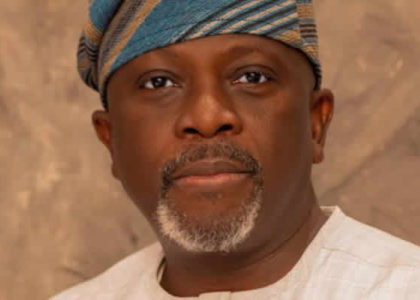
However, there is one name that many expected to hear immediately. one powerful figure whose profile fits the emerging pattern of 2027 succession politics, yet his radio silence persists. That name is Segun Ogunwuyi, the Chief of Staff to Governor Makinde. And that leads to the question now on everyone’s lips, when will Segun Ogunwuyi declare his intention?
From the very beginning of this political cycle, I have noticed that this question refuses to die down. Across boardrooms, political group chats, and weekend gatherings in markets and civil society meetings, people keep bringing Ogunwuyi’s name into the conversation. Whether supporters of other aspirants like Teslim Folarin or Adebayo Adelabu, or political watchers without direct party affiliations, the narrative keeps looping back to him not just as a possible contender, but as a potentially formidable one. This widespread attention shows that Ogunwuyi is more relevant to the 2027 picture than many are willing to admit publicly.
Part of this relevance comes from the office he now holds. The position of Chief of Staff in any government is not a mere administrative title; in the Makinde administration, it functions as one of the most strategic nerve centres of governance. The Chief of Staff coordinates government activities, oversees political strategy, manages key stakeholder relations, and essentially serves as the gatekeeper of executive power. In many ways, Ogunwuyi sees the inner workings of governance differently from any other political appointee in the state. He is privy to policy direction, party strategy, and the very mechanics of power that most of his contemporaries can only speculate about. In that sense, his political experience, which includes a stint in the House of Representatives representing Ogbomoso North, Ogbomoso South and Oriire Federal Constituency makes him uniquely positioned for a gubernatorial run.